 A few years ago, Ken Crum started getting uncomfortable with how much of his life seemed to be online. The long-time computer programmer was particularly concerned by what companies appeared to know about him. The amount of personal information was mind-boggling to the 66-year-old Texan, who recently moved from Dallas to the small town of Weatherford. Data brokers were collecting his personal details. Social media was targeting ads at him. Then one day, after shopping at a local home improvement store, he got an email from the company asking how his visit was. While he can't be absolutely certain, he's pretty sure the company used location-tracking on his work phone to find him. He found it all unnerving. So Crum decided to pull himself off most social media, keeping just his LinkedIn account. He quit using Google in favor of DuckDuckGo, a search engine that promises to protect user privacy. He deleted tracking-prone "app crap" — his words — from his smartphone. And he tried to wrestle as much of his personal information back from the data brokers as possible, paying for a subscription to DeleteMe, a service that helps people remove information from databases. The data collection doesn't stop there. Your Yelp review of a pizza parlor or a comment you posted on your local newspaper's website all become part of your digital profile. They're used by marketers trying to get you to buy something, to support a policy, or to vote for a candidate. There are oodles of data about you. Most of that info is largely free for the taking. As you'd expect, there's no shortage of companies looking to profit from it. At last count, there were about 540 data brokers operating in the US, according to the Privacy Rights Clearinghouse, which based its estimate on numbers from data broker registries maintained by California and Vermont. The skyrocketing amount of consumer data online has also given cybercriminals new opportunities to exploit your personal details for identity theft, online scams, or other kinds of fraud. Once cybercriminals get your data, they use it to try to bust into your accounts or sell it to other cybercrooks. Get breached once and you may spend years cleaning up the mess. (Here's how to remove your personal information from the internet.) Creating massive databases of consumer profiles has gotten easier in recent years because of advances in artificial intelligence technology that allow for better cross-referencing and correcting of data, says John Gilmore, Abine's head of research. The databases are bigger and more accurate than ever. Though many people worry data brokers are mining their social media accounts for personal information to feed those databases, Gilmore says the vast majority of information comes from voter registration rolls, property and court records, and other conventional public sources. Still, smaller, questionably legitimate data farmers are likely scraping social media, as well as buying stolen consumer data off the dark web, Gilmore says. Worse, cybercriminals and extremists groups have used these methods. A few years ago, members of the alt-right — a loose collection of neo-Nazis and white supremacists — attempted to create data profiles of supposed far-left activists with the intent of using the data to dox and harass them. Those groups have a lot of data to work with these days. People have unwittingly become "data creators," Velasquez says. The digital footprint produced by the average person goes well beyond Facebook oversharing. Keeping tabs on the data created by online shopping, online entertainment and simply surfing the internet goes well beyond the capabilities of most people. More in-depth details are posted on OUR FORUM. 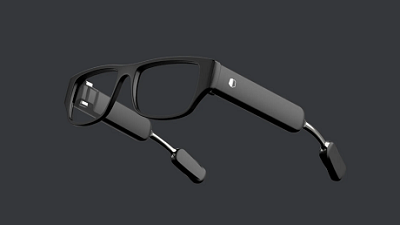 SMART GLASSES COME in many different flavors. There's the augmented reality kind, which can overlay helpful information on the real world, the type that acts as a Bluetooth speaker but on your head, and even glasses that work as a head-strapped camera to capture moments of your day. Then there's the kind that works as a wearable display—with their tiny screens embedded into the sides of each lens so you can view multiple virtual screens to watch movies, work, or play games—all without needing to hold a smartphone up to your face. Most wearable displays, like Lenovo's ThinkReality A3, need to be tethered to a mobile device or laptop for power and processing so the glasses aren't weighted down by chips and batteries. But that's what's interesting about Nimo, new glasses from a company called Nimo Planet. These smart specs forgo the need for a wired connection while remaining relatively light. Instead, they utilize Qualcomm's Snapdragon XR1 processor, turning them into something like a mini-computer that sits on your head. Nimo Planet wants its glasses to replace your laptop when you're on the go. Instead of lugging around your 3-pound machine, you'd just grab your Nimo, a slim Bluetooth keyboard, and a mouse (or maybe something like this). Don the glasses at the airport or coffee shop, and the dual displays on the edge of each lens will serve up to six virtual screens so you can continue typing away. Or so the company says. Nimo Planet has been working on these glasses for more than four years, with a core team of 10 people based out of Kerala, India. After burning through a mere $300,000 during development in that time, the company is finally launching an Enterprise and a Developer program, where third-party developers can get early access to dev kits, and enterprise customers can reserve units. The company expects the glasses to ship in the first half of 2023, and folks in select cities in India and the US will be able to buy Nimo for a cool $799. What makes Nimo feel promising is its focused approach. It's not trying to do everything. There are no augmented reality mechanics. There's no camera for you to take pictures with. There aren't any speakers either—you'll need to pair your own Bluetooth earbuds to the glasses. And these glasses aren't designed to handle intensive tasks like Photoshop, just lower-lift apps for word processing and project management. “We want to make the hardware as simple as possible and make sure the multiscreen productivity works great," says Rohildev Nattukallingal, Nimo Planet's founder and CEO. "Everything else is secondary for us. That's why we don't have a camera, speaker, depth sensors—all the big companies are focusing to build the next mixed reality world, but our approach is more about how we can help someone work anywhere without compromising productivity.” Nattukallingal says potential customers he's spoken to are interested in implementing mixed reality glasses for employees who need to work while traveling. The first perk? No one can peer over your shoulder and see what's on your screen—important if you're handling delicate contracts. (Lenovo also touts this as a boon of the ThinkReality A3, its tethered smart glasses system.) Nimo looks better than most smart glasses, but its arms are still chunky. A cursory second glance is all anyone will need to confirm that you're obviously not wearing normal glasses. The arms do support touch input though, so if you don't have a Bluetooth keyboard or mouse paired, you can use your gaze to look at items and tap the arm to select them. Naturally, the keyboard and mouse will be the primary input mechanism for Nimo, but the company says it has filed a patent for a new type of input device that would replace them (this is a few years away). Alternatively, you can use your phone as a trackpad. Speaking of which, since Nimo has no 5G or LTE connectivity, you'll need to hook it up to Wi-Fi or tether it to your phone to receive and send data. As for the dual 720p displays, they might look small, but what you see is the virtual equivalent of a 45- to 50-inch screen. The whole system will last around two and a half hours on a single charge, but Nattukallingal thinks this can improve as the company works with new battery vendors and further optimizes the hardware and software. The glasses will come with a carrying case that doubles as a charging station with a built-in battery, much like a wireless earbud case. And if you're wondering about prescriptions, you won't be able to get those done through the company. You'll need to head to an optometrist and have them insert your prescription lenses into the frame. Complete details can be found on OUR FORUM.  LokiLocker, a relatively new form of ransomware, uses the standard extortion-through-encryption racket but also incorporates disk-wiper functionality. Double extortion became a hit last year when ransomware gangs started stealing files before encrypting them to threaten victims with a sensitive data leak if they didn't pay up. BlackBerry Threat Intelligence is now warning that LokiLock, first seen in August 2021, now features an "optional wiper functionality" to put pressure on victims in a slightly different way. Instead of attackers using the threat of leaking a victim's files to pressure them into paying, LokiLock's customers threaten to overwrite a victim's Windows Master Boot Record (MBR), which wipes all files and renders the machine unusable. But that tactic effectively ends all negotiations about payment, of course. Disk-wiper functionality has come into focus recently because of destructive malware attacks on Ukrainian organizations. The US government fears destructive malware could target organizations in the West in retribution for sanctions against Russia. Historically, disk-wiper malware has often been favored by state-sponsored hackers, as was the case in NotPetya, WhisperGate, and HermeticWiper – all directly or loosely connected to Russian state-sponsored actors – where ransomware is a decoy for the true destructive intent. But commercially motivated ransomware that destroys the victim's computer? It certainly appears to be a different style of ransom negotiation than ransomware linked to Russian actors. "With a single stroke, everyone loses," BlackBerry notes. However, Microsoft has been tracking emerging – presumed state-backed or affiliated – Iranian hacking groups that are employing both encryption and destructive malware. BlackBerry points to some evidence that suggests LokiLocker was developed by Iranian hackers and designed to target English-speaking victims. The evidence: there are very few English spelling errors in the malware's debugging strings; LokiLocker affiliates are chatting on Iranian hacking forums, and Iran is the only location currently blacklisted for activating encryption. Additionally, some credential-cracking tools distributed in early samples of LokiLocker "seem to be developed by an Iranian cracking team called AccountCrack". "Although we've been unable to reliably assess exactly where the LokiLocker RaaS originates, it is worth mentioning that all the embedded debugging strings are in English, and – unlike the majority of malware originating from Russia and China – the language is largely free of mistakes and misspellings," BlackBerry notes. "It's not entirely clear whether this means they truly originate from Iran or that the real threat actors are trying to cast the blame on Iranian attackers," it said. It's common for Russia-based ransomware gangs to not activate malware on machines within Commonwealth of Independent States nations – often configured by blacklisting specific language codes within a machine's language settings. But BlackBerry says LokiLocker appears to be in beta. The Iran blacklist functionality hasn't been implemented. As for the disk-wiper functionality, BlackBerry says the malware will attempt to destroy a system if a ransom isn't paid within the specified timeframe. It deletes all of a victim's files, except for system files, and also tries to overwrite the MBR and then, after forcing a Blue Screen of Death error message, reboots the wiped machine and displays the message: "You did not pay us. So we deleted all of your files : ) Loki locker ransomware_". For more visit OUR FORUM. |
Latest Articles
|