 China criticizes US for being ‘world’s number one secret stealer’ after reports of NSA spying on allied leaders. The Chinese Foreign Ministry has issued a stern rebuke of US intelligence practices after Emmanuel Macron and Angela Merkel demanded answers about reports that Washington used Danish intelligence to monitor its allied leaders. Speaking on Thursday, Foreign Ministry spokesman Wang Wenbin claimed that the US is the world’s number one secret stealer and gladly snoops on its allies using a broad spectrum of techniques. The recent media reports of the US’ monitoring of its European allies is just the tip of the iceberg of Washington’s huge global secrecy network, Wang stated, adding the international community needs to hold the Americans to account. Wang claimed that the so-called ‘clean network’, a platform proposed by the Trump administration meant to safeguard against aggressive intrusions by malign actors, is just a ruse to consolidate the US monopoly on technology. The spokesman said that while the US has undertaken covert operations, eavesdropping on the world, including its allies, it has also unreasonably suppressed other nations and commercial entities on the grounds of so-called national security. This “fully exposes the hypocrisy of the US,” he stated. On Monday, French President Emmanuel Macron and German Chancellor Angela Merkel called on Washington to present an explanation for reports that the US had eavesdropped on its allies with the aid of Denmark. “This is not acceptable amongst allies,” Macron told a news conference, adding, “there is no room for suspicion between us.” The US’ National Security Agency (NSA) reportedly used the Danish Defense Intelligence Service to spy on senior officials France, Germany, Norway and Sweden from 2012 to 2014. The claims were made by the Danish public broadcaster Danmarks Radio following an internal investigation by the Danish Defence Intelligence Service.  If you use Alexa, Echo, or any other Amazon device, you have only 10 days to opt-out of an experiment that leaves your personal privacy and security hanging in the balance. On June 8, the merchant, Web host, and entertainment behemoth will automatically enroll the devices in Amazon Sidewalk. The new wireless mesh service will share a small slice of your Internet bandwidth with nearby neighbors who don’t have connectivity and help you to their bandwidth when you don’t have a connection. By default, Amazon devices including Alexa, Echo, Ring, security cams, outdoor lights, motion sensors, and Tile trackers will enroll in the system. And since only a tiny fraction of people take the time to change default settings, that means millions of people will be co-opted into the program whether they know anything about it or not. The Amazon webpage linked above says Sidewalk "is currently only available in the US." Amazon has published a white paper detailing the technical underpinnings and service terms that it says will protect the privacy and security of this bold undertaking. To be fair, the paper is fairly comprehensive, and so far no one has pointed out specific flaws that undermine the encryption or other safeguards being put in place. But there are enough theoretical risks to give users pause. Wireless technologies like Wi-Fi and Bluetooth have a history of being insecure. Remember WEP, the encryption scheme that protected Wi-Fi traffic from being monitored by nearby parties? It was widely used for four years before researchers exposed flaws that made decrypting data relatively easy for attackers. WPA, the technology that replaced WEP, is much more robust, but it also has a checkered history. Bluetooth has had its share of similar vulnerabilities over the years, too, either in the Bluetooth standard or in the way it’s implemented in various products. If industry-standard wireless technologies have such a poor track record, why are we to believe a proprietary wireless scheme will have one that’s any better? Next, consider the wealth of intimate details Amazon devices are privy to. They see who knocks on our doors, and in some homes, they peer into our living rooms. They hear the conversations we’re having with friends and family. They control locks and other security systems in our home. Extending the reach of all this encrypted data to the sidewalk and living rooms of neighbors requires a level of confidence that’s not warranted for a technology that’s never seen widespread testing. Last, let’s not forget who’s providing this new way for everyone to share and share-alike. As independent privacy researcher Ashkan Soltani puts it: “In addition to capturing everyone’s shopping habits (from amazon.com) and their internet activity (as AWS is one of the most dominant web hosting services)... now they are also effectively becoming a global ISP with a flick of a switch, all without even having to lay a single foot of fiber.” Amazon’s decision to make Sidewalk an opt-out service rather than an opt-in one is also telling. The company knows the only chance of the service gaining critical mass is to turn it on by default, so that’s what it’s doing. Learn more at OUR FORUM.
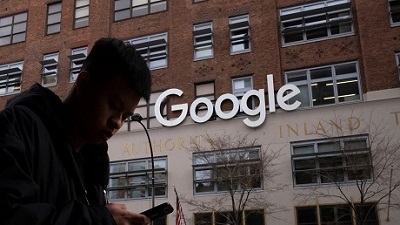 Newly unredacted documents in a lawsuit against Google reveal that the company's own executives and engineers knew just how difficult the company had made it for smartphone users to keep their location data private. Google continued collecting location data even when users turned off various location-sharing settings, made popular privacy settings harder to find, and even pressured LG and other phone makers into hiding settings precisely because users liked them, according to the documents. Jack Menzel, a former vice president overseeing Google Maps, admitted during a deposition that the only way Google wouldn't be able to figure out a user's home and work locations is if that person intentionally threw Google off the trail by setting their home and work addresses as some other random locations. Jen Chai, a Google senior product manager in charge of location services, didn't know how the company's complex web of privacy settings interacted with each other, according to the documents. Google and LG did not respond to requests for comment on this story. The documents are part of a lawsuit brought against Google by the Arizona attorney general's office last year, which accused the company of illegally collecting location data from smartphone users even after they opted out. A judge ordered new sections of the documents to be unredacted last week in response to a request by trade groups Digital Content Next and News Media Alliance, which argued that it was in the public's interest to know and that Google was using its legal resources to suppress scrutiny of its data collection practices. The unsealed versions of the documents paint an even more detailed picture of how Google obscured its data collection techniques, confusing not just its users but also its own employees. Google uses a variety of avenues to collect user location data, according to the documents, including WiFi and even third-party apps not affiliated with Google, forcing users to share their data in order to use those apps or, in some cases, even connect their phones to WiFi. "So there is no way to give a third-party app your location and not Google?" one employee said, according to the documents, adding: "This doesn't sound like something we would want on the front page of the [New York Times]." When Google tested versions of its Android operating system that made privacy settings easier to find, users took advantage of them, which Google viewed as a "problem," according to the documents. To solve that problem, Google then sought to bury those settings deeper within the settings menu. Google also tried to convince smartphone makers to hide location settings "through active misrepresentations and/or concealment, suppression, or omission of facts" — that is, data Google had to show that users were using those settings — "in order to assuage [manufacturers'] privacy concerns." Google employees appeared to recognize that users were frustrated by the company's aggressive data collection practices, potentially hurting its business. More details can be found on OUR FORUM.
|
Latest Articles
|