 I love when products are made in the USA. Don't get me wrong, I am not against things made in other countries. Hell, it is virtually impossible to live in America and not buy foreign goods. If you look at the tags on your clothes, you will almost never see "Made in the USA." But still, I take pride when a product is made here. For instance, so far in my life, I have only ever owned Ford vehicles. With that said, Ford is moving more and more of its labor to Mexico, but I digress. Computers made in America are virtually non-existent, but a little company in Denver had a dream to do just that. System76 has long been looking to make a Linux-powered computer in the USA using open source ideology. A lofty goal, which many folks didn't think would ever be achieved. Well, against all odds, today, System76 proves the haters wrong as it finally unveils its much-anticipated Thelio desktop computer. And boy, oh boy, it is beautiful. "Thelio Systems are designed to be easily expandable, making personalizing the computer a tantalizingly easy process. Slip in drives, add memory, and upgrade graphics cards at will. Additionally, the open hardware design that Thelio is built upon allows the user to easily learn how their computer works and make modifications using this information. Customization is simple to ensure that the computer encompasses people’s needs, as well as their personality," says System76. More details are posted on OUR FORUM.  A new side-channel vulnerability has been discovered called PortSmash that uses a timing attack that to steal information from other processes running in the same CPU core with SMT/hyper-threading enabled. Utilizing this attack, researchers were able to steal the private decryption key from an OpenSSL thread running in the same core as their exploit. SMT/Hyper-threading is when one physical CPU core is split into two virtual logical cores that can be used to run two separate process threads at once. This method can increase performance as the two threads will utilize idle CPU resources more efficiently to execute instructions faster. A side channel timing attack is when an attacker analyzes how fast a thread executes particular instructions and utilizes that information to work backward to discover what data was used as input. The PortSmash vulnerability was discovered by researchers Billy Bob Brumley, Cesar Pereida Garcia, Sohaib ul Hassan, and Nicola Tuveri from the Tampere University of Technology in Finland and Alejandro Cabrera Aldaya from the Universidad Tecnologica de la Habana CUJAE in Cuba. An advisory was made to the OSS-Sec mailing list and their research has been submitted as a paper titled "Port Contention for Fun and Profit" as an IACR eprint, which is currently awaiting moderation before it's released. Learn more on this security update by visiting OUR FORUM. 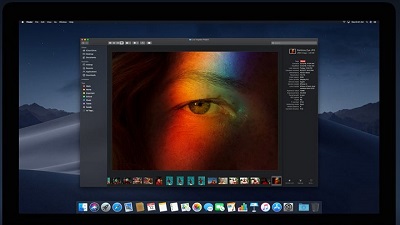 Kevin Backhouse, a researcher from U.S.-based security company Semmle, has uncovered six software vulnerabilities in Apple’s XNU operating system kernel, which is used in all of Apple's devices. The vulnerabilities have affected more than 1.3 billion devices worldwide. According to the Semmle researcher, the critical vulnerabilities exist in the XNU kernel used by Apple’s iOS, macOS, tvOS and watchOS operating systems. Backhouse said attackers could use these low-level software flaws to take remotely control any Apple device on the same network. The vulnerabilities exist in the kernel’s networking code and its client-side Network File System (NFS) implementation. The first vulnerability is a heap buffer overflow flaw in the ICMP packet-handling module of the XNU kernel’s networking code (CVE-2018-4407). An attacker could use this bug to run arbitrary code on a user’s machine, extract data, or cause a reboot. Backhouse also warned that because the flaw can be so easily exploited, it could be automated as a denial-of-service attack, which may then crash all affected devices on a network, potentially shutting down an entire organization. User interaction is not required for attackers to be able to take advantage of this vulnerability. The five bugs the researcher found in Apple’s NFS implementation could also allow attackers to read, write and delete files on a user’s NFS-mounted drive, as well as install applications or wipe the device entirely. The NFS implementation bugs primarily affect macOS machines. More can be found on OUR FORUM. |
Latest Articles
|