 Most recent Intel processors for desktops, laptops, and tablets feature integrated graphics capable of driving 4K displays and maybe even some gaming tasks. But Intel has been beefing up its graphics team recently, and now the company has confirmed recent reports that it plans to launch a discrete graphics card in 2020. The news comes via a short video posted on Twitter, and while it’s light on details, the company does promise that in 2020 it will “set our graphics free,” indicating that we’ll see a GPU that’s not built into the same silicon as an Intel CPU. This isn’t Intel’s first foray into discrete graphics solutions. The company launched the Intel i740 graphics card in 1998… but it was a commercial flop and the company scrapped the entire product line not long after that (a small number of i752 cards were released, but Intel canceled the i754 graphics card before it ever launched). At this point, it’s unclear what Intel hopes to bring to the table in 2020. A lot has changed in the past two decades and the discrete GPU space is still dominated by NVIDIA and AMD (which acquired GPU maker ATI). But Intel has also been chugging along all that time pushing more and more advanced features into integrated graphics. There's more posted on OUR FORUM. 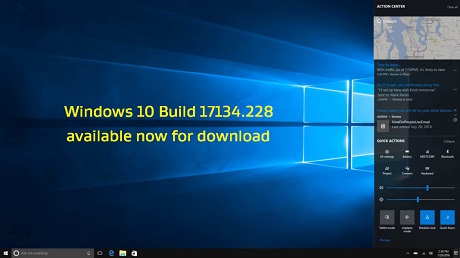 Today is Patch Tuesday and Microsoft has just rolled out Windows 10 KB4343909. In case you’re planning to upgrade the PC manually, the direct download links for Windows 10 KB4343909 are also available. KB4343909 is available for devices running Windows 10 version 1803 and it advances the system to Build 17134.228. The latest patch for Windows 10 April 2018 Update comes with its own pack of improvements. First and foremost, to check if you’re already running the latest build, press Win key + R and then winver. If it shows Windows 10 Build 17134.228, the cumulative update has installed successfully. If the build number is something else, you would need to Open Settings and navigate to Update & Security -> Windows Update -> Check for updates. The latest patch for Windows 10 April 2018 Update addresses both security and non-security bugs. The update has fixed issues with Internet Explorer and Microsoft Edge. In the changelog, Microsoft explains that the new protections against a speculative execution side-channel vulnerability known as L1 Terminal Fault (L1TF) have been applied. The company says that the vulnerability affects the Intel Core processors and Intel Xeon, processors. We have posted the download links on OUR FORUM. 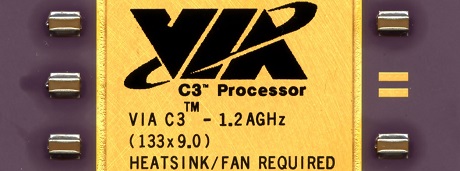 At the Black Hat 2018 and DEF CON 26 security conferences held in Las Vegas last week, a security researcher detailed a backdoor mechanism in x86-based VIA C3 processors, a CPU family produced and sold between 2001 and 2003 by Taiwan-based VIA Technologies Inc. The affected CPU family was designed with PC use in mind but was more widely known for being deployed with point-of-sale units, smart kiosks, ATMs, gaming rigs, healthcare devices, and industrial automation equipment. The Rosenbridge backdoor mechanism Christopher Domas, a well-known hardware security expert, says that VIA C3 x86-based CPUs contain what he referred to as a "hidden God mode" that lets an attacker elevate the execution level of malicious code from kernel ring 3 (user mode) to kernel ring 0 (OS kernel). See here about CPU protection rings. Domas says that this backdoor mechanism —which he named Rosenbridge— is a RISC (Reduced Instruction Set Computer) co-processor that sits alongside the main C3 processor. Continue reading on OUR FORUM. |
Latest Articles
|