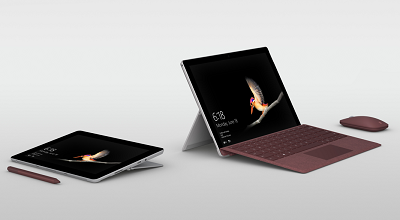
 Speaking to the Washington Post, corporate vice president of Microsoft’s Modern Life and Devices team Yusuf Medhi revealed that the device has been designed so owners use it less and “waste less time.” Medhi claimed this design goal was reflected in the smaller size, making it “easier to use and put away“, the LTE chip which “is supposed to make it easy to hop on and off the Internet” and even the optional Alcantara fabric keyboard, which makes the “tech feel a little more comfortable, a little warmer and a little more human“. While Medhi did not touch on these other items, we assume the small screen to body ratio which makes the tablet less immersive is also there to make you use it less, and the use of battery-sucking Intel chips vs ARM chips forces you to switch off after a few hours of use, while the use of eMMC storage should make users of the cheapest model so frustrated they will soon stop browsing Facebook. Medhi said cleaning out his garage minus his phone was the source of his inspiration, saying of completing the work: “Looking back, I had almost never been prouder.” There's more posted on OUR FORUM.  Susan Bradley, an 18 year Microsoft MVP focused on Windows patching and patch management has sent an open letter to Microsoft executives Satya Nadella, Carlos Picoto, and Scott Guthrie about the frustration Windows 10 users have when dealing with installing new updates. This letter includes the results of a survey taken by over 1,000 consultants and over 800 consumers regarding their experience with Windows 10 updates. Being a Microsoft MVP in Consumer Security, I have known Susan for quite some time and can tell you that she is somewhat of a legend among those who regularly support Microsoft products. When I saw her open letter mentioned at AskWoody.com and posted at ComputerWorld, I read through many of the survey comments and decided to reach out to her to find out more about why she wrote the letter. "It's due to increasing frustration with patching and patch management issues. We have the letter on OUR FORUM.  Most of the world’s industrial products contain parts that are made in China, while many others are fully assembled in China. Now though, as part of a countrywide drive to re-focus the Chinese economy on innovation, creation and technological research and development, Chinese brands are becoming increasingly abundant even in markets where they were previously rare. Recent figures for the most widely sold smartphones across the world have seen China’s Huawei overtaken the US brand Apple as the second most popular smartphone make in the world while South Korea’s Samsung retained the number one spot. While building, promoting and gaining trust in a major brand takes time and effort, Huawei’s inroads into previously untapped markets is symptomatic of the rapid acceleration of ‘Brand China’ across the globe in a manner that parallels the rapid ascension of Japanese brands worldwide in the 1970s and 1980s when previously unfamiliar companies like Sony, Mitsubishi and Toyota became household names. read more on our Forum |
Latest Articles
|