 Microsoft’s low-cost Surface has passed through the FCC recently, and now more information about the $400 Surface tablet has been revealed. Via WinFuture.de we hear the device will be powered by Intel Pentium Gold and Pentium Silver chipsets. The cheaper models will most likely come with the Intel Pentium Silver N5000, a four-core x86 SoC from the “Gemini Lake” family running at 1.1 gigahertz base clock, and up to 2 when needed, 2.7 GHz can clock up. The more expensive versions will likely feature the Intel Pentium Gold 4410Y and the Intel Pentium Gold 4415Y, both based on the “Kaby Lake” architecture. The chips are based on 14 nm process and can be fanless. The device shows up on Geekbench with OEMTX EV1 or OEMTX EV1 LTE codenames, confirming the presence of an LTE version. There the devices run Windows 10 Pro 64bit with 4 to 8 GB of RAM. The cheaper Surfaces are expected to hit the market in the second half of 2018 and Bloomberg reports will have 10-inch screens and more rounded edges. The tablet is expected to drop the Surface Connector in favor of standard USB-C. They will also be lighter with around 9 hours of battery life. It will retain the iconic built-in kickstand. This is continued on OUR FORUM.  In a 747-page document provided to the US House of Representatives' Energy and Commerce Committee on Friday, Facebook admitted that it granted special access to users' data to 61 tech companies. According to the document, these 61 companies received a "one-time" extension so they could update their apps in order to comply with a Terms of Service change the company applied in May 2015. The six-month extension was applied from May 2015, onward, when Facebook restricted its API so apps could not access too much data on its users, and especially the data of users' friends. The API change came in a period when apps like the one developed by Cambridge Analytica were using the Facebook API to mass-harvest the data of Facebook users. In May 2015, Facebook realized that apps were abusing this loophole in its permission system to trick one user into granting permission to the personal data of hundreds of his friends, and restricted the Facebook API to prevent indirect data harvesting. But these 61 tech companies, because they ran popular apps, received an exemption to this API change, during which, theoretically, they could have abused the Facebook API to collect data on Facebook users and their friends. Data that could have been collected included name, gender, birthdate, location, photos, and page likes. The 61 companies are listed on OUR FORUM. 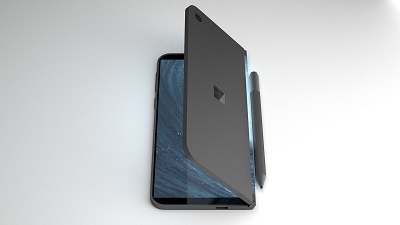 Well, that was not completely unexpected. Despite building rumors of a 2018 release for Microsoft’s long-rumored dual-panel mobile Surface device ZDNet’s Mary Jo Foley reports that the project has been put on hold. Reportedly part of the reason is that AndromedaOS which powers the device is just not ready to ship in time for RedStone 5, due to “scheduling and quality” issues. MaryJo also said there was no guarantee it will show up in the next version of the OS either. Another reason, however, is that some in Microsoft just does not see enough demand for a pocket-sized foldable Surface device which can only run store apps. The device may eventually make it to market as a larger PC-sized (we assume laptop-sized) device that can run regular apps. MaryJo reports the decision to withdraw Andromeda from RedStone 5 was made within the last few weeks and blames it in part on a recent April Microsoft reorg. She suggests the steady stream of leaks in recent weeks was by internal fans of the project and intended to drum up external support for the doomed project. It is notable that every recent leak has come with a proviso that the project could still be canceled at any moment. More can be found on OUR FORUM. |
Latest Articles
|