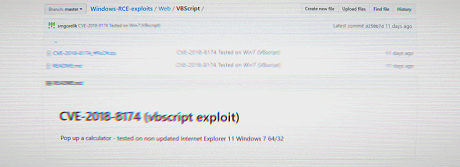
 A vulnerability exists in the Windows operating system's JScript component that can allow an attacker to execute malicious code on a user's computer. Responsible for discovering this bug is Dmitri Kaslov of Telspace Systems, who passed it along to Trend Micro's Zero-Day Initiative (ZDI), a project that intermediates the vulnerability disclosure process between independent researchers and larger companies. ZDI experts reported the issue to Microsoft back in January, but Microsoft has yet to release a patch for this vulnerability. Yesterday, ZDI published a summary containing light technical details about the bug. JScript bug leads to RCE  Apple has released security updates this week for seven products —macOS, iOS, watchOS, iTunes for Windows, tvOS, iCloud for Windows, and Safari. Out of all the vulnerabilities patched this week, two stands out, mainly because they affect the kernels of macOS, iOS, watchOS, and tvOS alike. Two vulnerabilities stand out. The vulnerabilities are CVE-2018-4241 and CVE-2018-4243, both discovered by Google security engineer Ian Beer. Neither Beer nor Apple has released expansive details about these two bugs. Both issues are buffer overflows in the kernel code that can lead to an attacker executing malicious code within the context of the kernel, giving him full access to a device. But these are all the details currently available. In fact, Apple is currently still hiding the changelog of the iOS, watchOS, and tvOS security patches in an attempt to allow users to update without giving attackers a clue to what's hiding inside. Patches with links are posted on OUR FORUM. |
Latest Articles
|