 We’ve been hearing a lot about the problems with the flickering screens of the Surface Pro 4 tablet and now it seems that Microsoft is ready to take action about it. Not only are they replacing faulty units, but also doing so even for units that are out of warranty. It was back in February when we learned that people were putting their Surface Pro 4 devices on ice, as a workaround to solve the devices’ problems. Putting the tablet in the freezer seemed to fix the screen flicker. It was only temporary, as 10 minutes in the fridge meant about half an hour of use without problems. Microsoft decided that the tons of forum threads and Reddit complaints were enough and they’re acting on it. Microsoft decided that some units are simply not repairable and they’re going to replace units, even if they’re out of warranty. Still, no longer than 3 years have to have passed since the purchase. If you already spent money on repairs, you will be reimbursed. Of course, you will get a new Surface Pro 4 as a replacement, not the new last year model, as you probably imagined. Full details can be found on OUR FORUM.  Microsoft's twice-a-year feature updates are a greater burden on companies than the old upgrade-every-six-years pace businesses used to face, according to Gartner Research. Microsoft has given customers all kinds of reasons for why the faster release pace of Windows 10 is a great idea, from keeping pace as technology change accelerates to staying ahead of hackers by constantly improving security. What it's never spelled out is how much the rapid releases would cost users. In a recent report, Gartner Research put numbers to those costs, and concluded - spoiler alert! - that Microsoft's twice-annual feature updates were a greater burden on enterprises than the once-traditional upgrade-every-six-years tempo that businesses managed until 2015. The report described a tool Gartner offered to clients, the "Windows 10 Feature Update Cost Model," which lets enterprises estimate costs for tackling one or two such updates each year. The goal of the tool: to "model and plan your cost and labor requirements" for those transitions... read more on our Forum 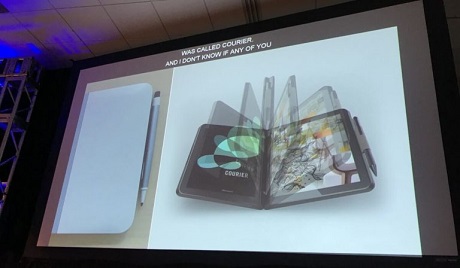 Back in 2008, Microsoft was internally testing a tablet PC with two displays, and the device would have featured a booklet design. The two displays with touch support faced each other in a booklet form and it also supported stylus (pen). Microsoft did work on Courier but the company never released it in the market. While Microsoft is working on a new mobile device similar to the Courier digital Notepad concept, but the company has always remained tight-lipped on the original and canceled Courier tablet. At Build 2018 developer conference, Microsoft revealed what exactly happened to the Courier project. The operating system of the Microsoft Courier was reportedly a custom version of Windows. Steve Ballmer decided to cancel such a device “because it didn’t have a clear platform or developer story”. “The reason Courier got killed was that it was another side project, it was another thing we were playing with and it didn’t have a clear developer story or clear platform story,” Friedman said. In other words, Courier was canceled because it ran a custom version of Windows, and it didn’t align with Microsoft’s vision. More can be found on OUR FORUM. |
Latest Articles
|