DLSS 5 heavily increases RTX 5090 power demands, exposing 12V-2x6 connector and power-limit constraints.
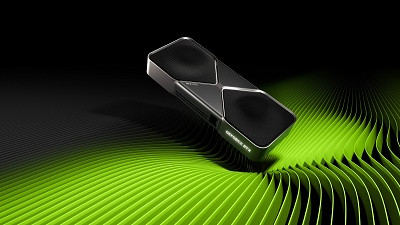
The 12VHPWR connector burning / melting issue has been something pertinent to top-end Nvidia cards ever since the launch of of the RTX 40 series, and things have only gotten more and more common over time, so much so that, users have even started vibe-coding useful apps to monitor and restrict power in order to save their card from going up in flames.
Interestingly, it looks like there is another twist in the tale of the 12VHPWR connector, something that was discovered rather unexpectedly during testing of DLSS 5. If you have not been following, DLSS 5 is Nvidia's latest gen AI upscaling tech which was touted as the "GPT moment for graphics" during GTC 2026 announcement. As you are already familiar with, Nvidia is all-in on AI, and Jensen Huang just announced the purchase of Hugging Face earlier today.
However, DLSS 5 has been pretty divisive in the gaming community due to its nature of handling the rendering of upscalings. Regardless of the image quality and how they are cooked up, Tom's Hardware decided to put DLSS to a performance test using Nvidia's RTX 5090 Founders Edition (FE) along with MSI's RTX 5090 Lightning Z. The latter is a much beefier aftermarket variant because it packs two 12V-2x6 power connectors and can be configured with a massive 1000W power limit through its Extreme vBIOS. In essence, they were pitted against one another to see if DLSS 5 can actually make use of all that additional power headroom.
The testing involved running games at 4K with DLSS Performance mode, meaning the games were being rendered at 1080p natively before being upscaled. The maximum available rasterization and ray-tracing settings were used, with path tracing enabled in Cyberpunk 2077, though Multi Frame Generation (MFG) was left out so as to help isolate the performance impact of DLSS 5 only.
And the results were pretty interesting. In Cyberpunk 2077, enabling DLSS 5 caused the RTX 5090 FE to take a 42% performance hit, while the Lightning Z saw a slightly smaller 39% drop. However, the MSI card maintained a higher frame rate overall thanks to its additional power headroom.
The power consumption numbers give an idea of what could really be happening. The Lightning Z went from around 580W to 723W with DLSS 5 enabled, which was a 25% increase. The FE, meanwhile, climbed from 482W to 551W, which is approximately 14.5%, but was effectively running into its power limit.
The same pattern appeared in Hogwarts Legacy as well where the Lightning Z's power usage jumped from roughly 480W to 720W, a staggering 50% increase. Performance also dropped by 42% on the MSI card, compared to 49% on the FE.
Control produced another interesting result. The Lightning Z was already consuming around 691W without DLSS 5, but that figure jumped to 802W with neural rendering enabled. The FE, on the other hand, once again ran into its 575W power limit. Despite both cards suffering a 42% performance reduction, the MSI model still managed 20% higher average frame rates thanks to its much higher power allowance.
This is where the 12V-2x6 connector becomes an unexpected problem for DLSS 5. The issue is not necessarily that the RTX 5090 cannot physically run the technology, but that Nvidia's Founders Edition design has a fairly hard ceiling on how much power it can provide through its single connector.
DLSS 5 appears to be really demanding on the Tensor Cores because its neural rendering system uses a diffusion-based AI model. Tom's Hardware's testing suggests that once you combine this workload with demanding ray tracing or path tracing, the 5090 can quite happily consume significantly more power than what the Founders Edition's 575W limit allows. This also implies that other low-cost AIB 5090 cards could put up similarly poor figures.
There is also an important caveat here, though. These tests were performed using community-made DLSS 5 mods that leaked earlier, instead than Nvidia's final implementation through its Streamline framework. Nvidia itself says the model takes around 8ms and 731 MB VRAM (via Nvidia Research) to process a 4K frame, and the performance seen through the mod was roughly in line with that figure, so the official implementation may not be dramatically different, though devs could still optimize it better for individual games.
Overall, the early testing suggests DLSS 5 is not exactly a free performance upgrade. Across the three games, the RTX 5090 experienced performance drops ranging from 39% to 49%, while the additional AI workload could push power consumption hundreds of watts higher on a card that has enough headroom to accommodate it.
gpus/]source[/size]

