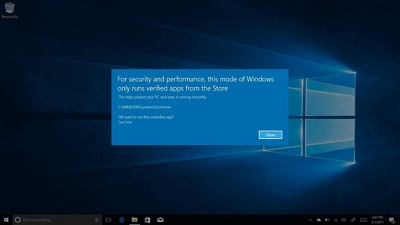
 Earlier this year, Microsoft announced S Mode for Windows 10 and phased out Windows 10 S. The “S” doesn’t stand for anything in particular, but Microsoft says Windows 10 in S Mode is streamlined for simplicity, security, and speed. Windows 10 in S Mode only allows the installation of apps from Microsoft Store (formerly Windows Store). Windows 10 in S Mode basically restricts the use of Win32 software. It’s designed for low-end devices in the education market, and Microsoft is still committed to the project. Microsoft is readying a feature called Switch to S Mode. The company is still working on Switch to S Mode feature and it will launch with Windows 10 Redstone 5. It would allow you to easily switch to the S Mode from the Settings app. As noted above, it’s a seamless process so you will be able to enable it with a few taps. You can switch to Windows 10 S by following the on-screen instructions in the settings app. The feature is already available in Windows 10 Build 17686, the most recent preview of Windows 10. The S Mode will likely be a feature of the Redstone 5 update due in the fall. Visit OUR FORUM for further details.  We have been following the EU’s investigating into Google’s anti-competitive practices for some years now, and its second major investigation is now coming close to a conclusion. Last year the EU fined Google $2.7 billion for its abuse of its search dominance to push its comparison shopping service. Now the EU has indicated they are getting ready to impose a fine on Google for its abuse of its smartphone operating system monopoly which could be up to 10% of its annual turn-over, or around $11 billion. Margrethe Vestager, the serving European Commissioner for Competition, said that the commission is “poised to announce the negative finding within weeks,” without revealing an actual number. Google stands accused of using its dominant Android mobile operating system to shut out rivals and favoring its own services. The European Commission does have teeth and recently forced Apple to pay back $15 billion in back taxes to Ireland. While the Google fine may not reach quite the same heights, it’s impact may end up being much more far-reaching in making a supposedly open operating system really open. More details are posted on OUR FORUM. 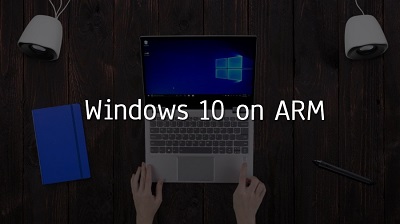 Earlier this week, Qualcomm announced its Snapdragon 850 Mobile Compute Platform for Always Connected PCs-powered by Windows 10. The focus of the processor is on Always Connected PCs, and it boasts a 30 percent increase in performance and a 20 percent increase in battery life. The chip manufacturer Qualcomm is now looking forward to working on its next processor for Windows 10 on ARM hardware. Qualcomm appears to be working on Snapdragon 1000 and it’ll feature a 12-watt (W) TDP, and such a level of TDP threshold simply wouldn’t run on a smartphone. The Snapdragon 1000 appears to be designed for Windows 10 ARM devices, so it’s likely that the processor will boost the performance of Always Connected PCs. The powerful TDP will improve the performance of the laptops dramatically, and the higher threshold power will be driven to components without overheating. We have very little information on the processor for the time being, but we’ll learn more about it later this year. German technology news outlet WinFuture reports that Qualcomm Snapdragon 1000 is coming soon with almost double TDP found on the Snapdragon 850. It will be competing against Intel’s processors and bringing it closer to Intel’s U-series 15W TDP. Details posted on OUR FORUM. |
Latest Articles
|